Across generations
Choose formats that do not depend on speed, pop-culture trivia or technology so grandparents, adults, teens and kids can participate together.

FAMILY REUNION GAMES
The strongest reunion games do more than fill time. They give relatives a reason to tell the stories younger family members have never heard.
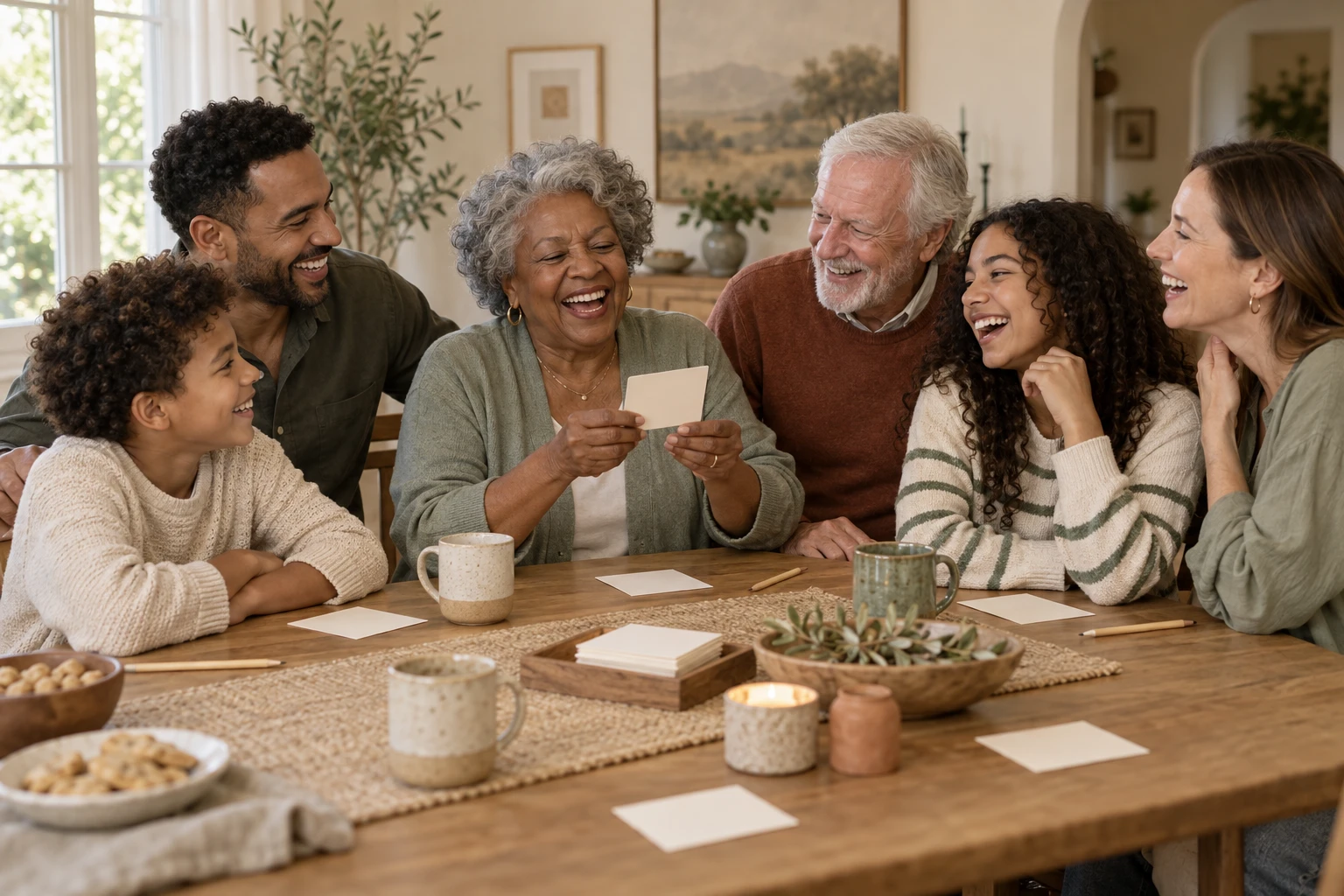
Built for real gatherings
Choose formats that do not depend on speed, pop-culture trivia or technology so grandparents, adults, teens and kids can participate together.
Turn nicknames, old photos, traditions, hometown stories and legendary family moments into clues and questions.
Build pauses into play so someone can explain the backstory behind a funny answer. That is where the keepsake value appears.
Teams, simple scoring and short rounds keep a large reunion moving without requiring a professional facilitator.
Grin & Tell
The game should sound like your people—not everybody else’s.
Create a personalized reunion gameBuilt across generations
Large families usually have different age groups, branches and levels of familiarity. That makes general trivia a weak default. Instead, use family locations, old photographs, recipes, traditions, migration stories, school memories, family sayings and well-known personalities as the shared material. Younger relatives may not know every answer, but the explanation becomes part of the experience.
For bigger reunions, teams solve several problems at once. They keep scoring manageable, mix generations naturally and give quieter relatives a way to participate without having to speak for the whole room. A rotating reader or host can keep rounds moving while still leaving room for short stories after memorable answers.
Write down the surprising answers and the stories people add during play. Those details can become next year's questions, a family history prompt, or a keepsake page. The game becomes more valuable when it helps capture stories that might otherwise disappear.
Keep exploring